
Sri Lanka faces recurring natural disasters; monsoon floods, landslides, cyclones, and tsunamis, which frequently disrupt telecommunications, damage infrastructure, and isolate vulnerable communities. During such crises, amateur radio has consistently served as a resilient, independent, and rapid-deployment communication system when conventional networks fail.
For over 75 years, the Radio Society of Sri Lanka (RSSL) has supported the nation through emergency communication (EmComm) operations, working alongside the Disaster Management Centre (DMC), the Telecommunications Regulatory Commission of Sri Lanka (TRCSL), and other government agencies. Recent events including the IOWave25 Tsunami Readiness Exercise (2025), the Ditwah Cyclone Flood Response (2025), and previous historic deployments during the 2004 Indian Ocean Tsunami and 2017 Floods highlight both the value and urgency of strengthening Sri Lanka’s EmComm capacity.
Founded in 1950, RSSL is the oldest and only internationally recognized amateur radio organization in Sri Lanka. It is the designated IARU Member Society (Region 3) and works closely with:
- Disaster Management Centre (DMC)
- Telecommunications Regulatory Commission (TRCSL)
- Ministry of Defence (MoD)
- Sri Lanka Police
- Sri Lanka Air Force & Airport and Aviation Services
- Sri Lanka Scout Association
- National universities and STEM education institutions
Emergency Communication Team (EmComm)
- HF, VHF, UHF communication
- Digital modes (FT8, JS8, Winlink, APRS)
- Field deployment under grid-failure conditions
- Rapid antenna and station setup
- Message relaying and net control
ARCSN Partnership

RSSL works closely with the Amateur Radio Civil Services Network (ARCSN), an RSSL affiliated group dedicated to providing amateur radio support to
emergency and public service sectors. ARCSN plays a significant role in repeater maintenance, training, and emergency readiness.
RSSL’s Track Record in Emergency Response
2004 Indian Ocean Tsunami
Amateur radio operators from RSSL:
- Provided the first communication links in affected coastal regions
- Relayed emergency messages, supply needs, and rescue instructions
- Supported national and international relief agencies
This established RSSL as a key EmComm stakeholder in Sri Lanka
2017 Floods & Landslides
Collaboration with:
- Sri Lanka Air Force
- Disaster Management Center (DMC)
- Local authorities
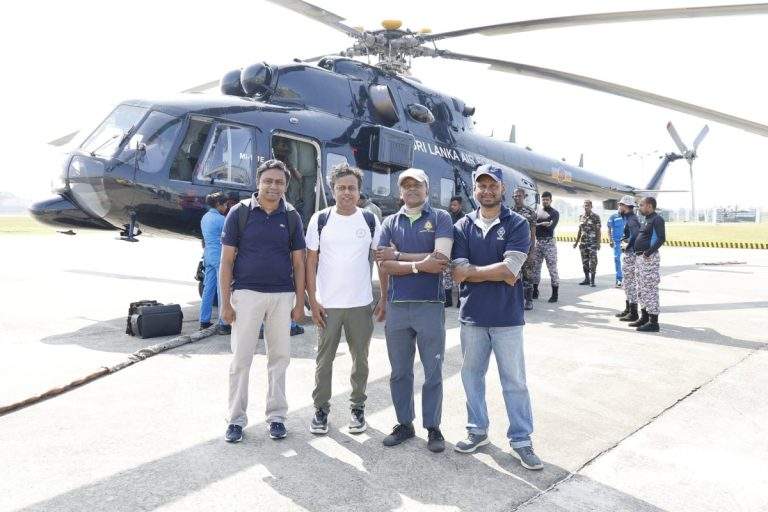
RSSL volunteers were airlifted to Kalawana and Ratnapura to establish communication nodes when mobile networks were down.
Monsoon Floods (2017–2024)
Annual activation of RSSL volunteers supporting local-level response.
IOWave25 Tsunami Readiness Exercise
RSSL:
- Operated HF/VHF emergency traffic
- Supported evacuation simulation
- Relayed test messages to DMC and other government/health stakeholders
- Provided digital-reporting demonstrations
Cyclone Ditwah Flood Response (2025)
During the November 2025 floods, RSSL deployed operators to:
- TRCSL Headquarters for coordination
- Chilaw, Girandurukotte and Kotmale field stations
Volunteer operators worked under extreme conditions, providing essential communication support.